Five layers
A system, not a coat
The membrane gets the attention, but it only works when every layer beneath it is right. Select a layer to see what it does.
An optional finish for colour stability in sunlight, texture for grip or extra chemical resistance.
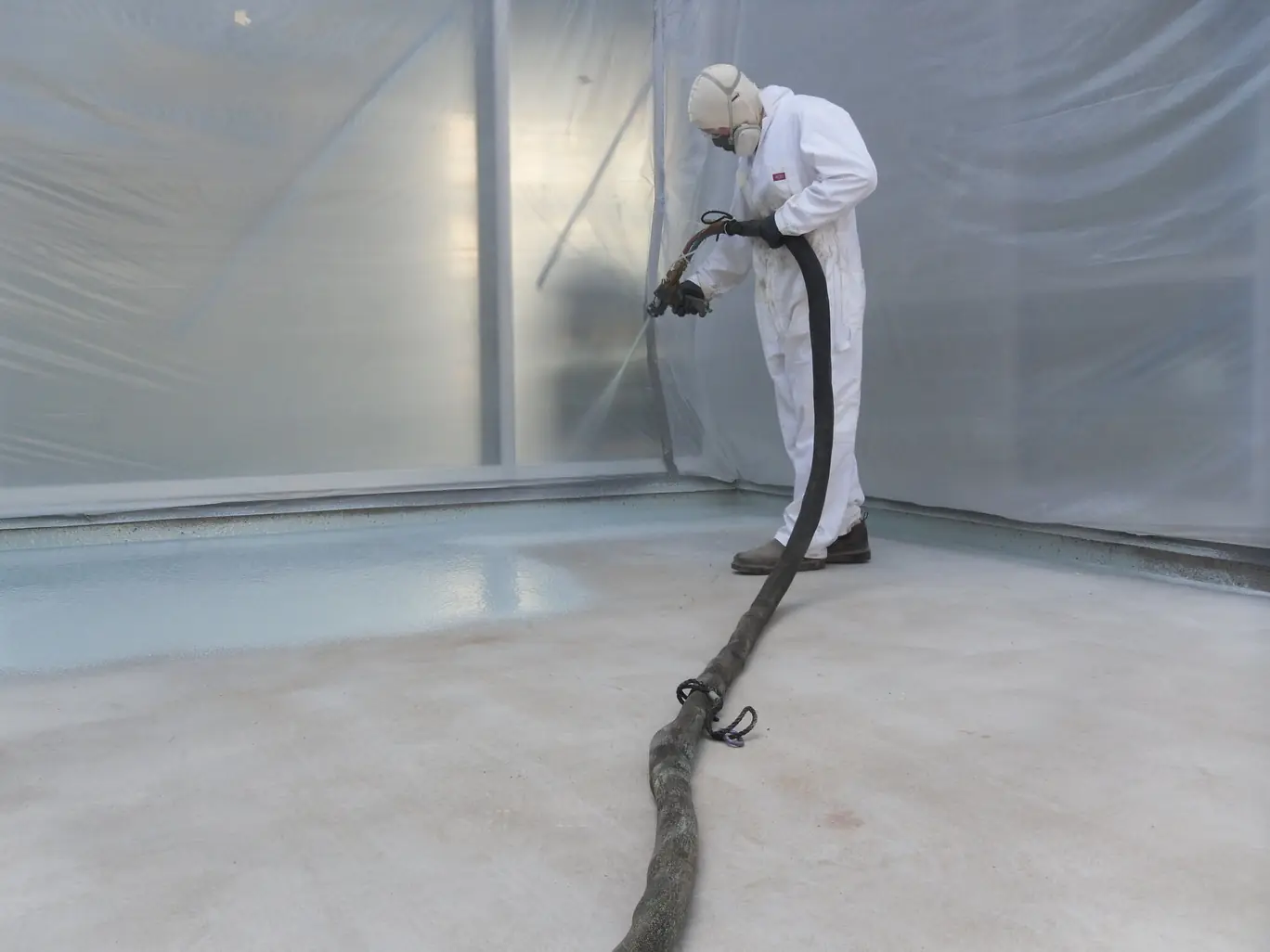
The thick, tough layer that does most of the protecting. Spray polyurea is often applied here in one or more passes.
A thin layer that seals porous surfaces, controls outgassing and improves adhesion. The data sheet says when it is required.
Cleaning, repairing and profiling the surface by grinding, blasting or pressure washing so the system can bond.
The surface being protected: concrete, steel, block, wood or an older coating. Its condition sets the rest of the plan.
Layer by layer
What each layer is for
- 01
Substrate
The surface being protected: concrete, steel, block, wood or an older coating. Its condition sets the rest of the plan.
- 02
Preparation
Cleaning, repairing and profiling the surface by grinding, blasting or pressure washing so the system can bond.
- 03
Primer
A thin layer that seals porous surfaces, controls outgassing and improves adhesion. The data sheet says when it is required.
- 04
Base membrane
The thick, tough layer that does most of the protecting. Spray polyurea is often applied here in one or more passes.
- 05
Topcoat
An optional finish for colour stability in sunlight, texture for grip or extra chemical resistance.
Keep in mind
The system is only as good as its weakest layer
A tough membrane over damp, dusty concrete will still blister. Each layer has its own data sheet, and the supplier should confirm that the products are meant to be used together. The surface preparation guide covers the layer that decides most outcomes.