Guide 01 / G1
Polyurea for protection
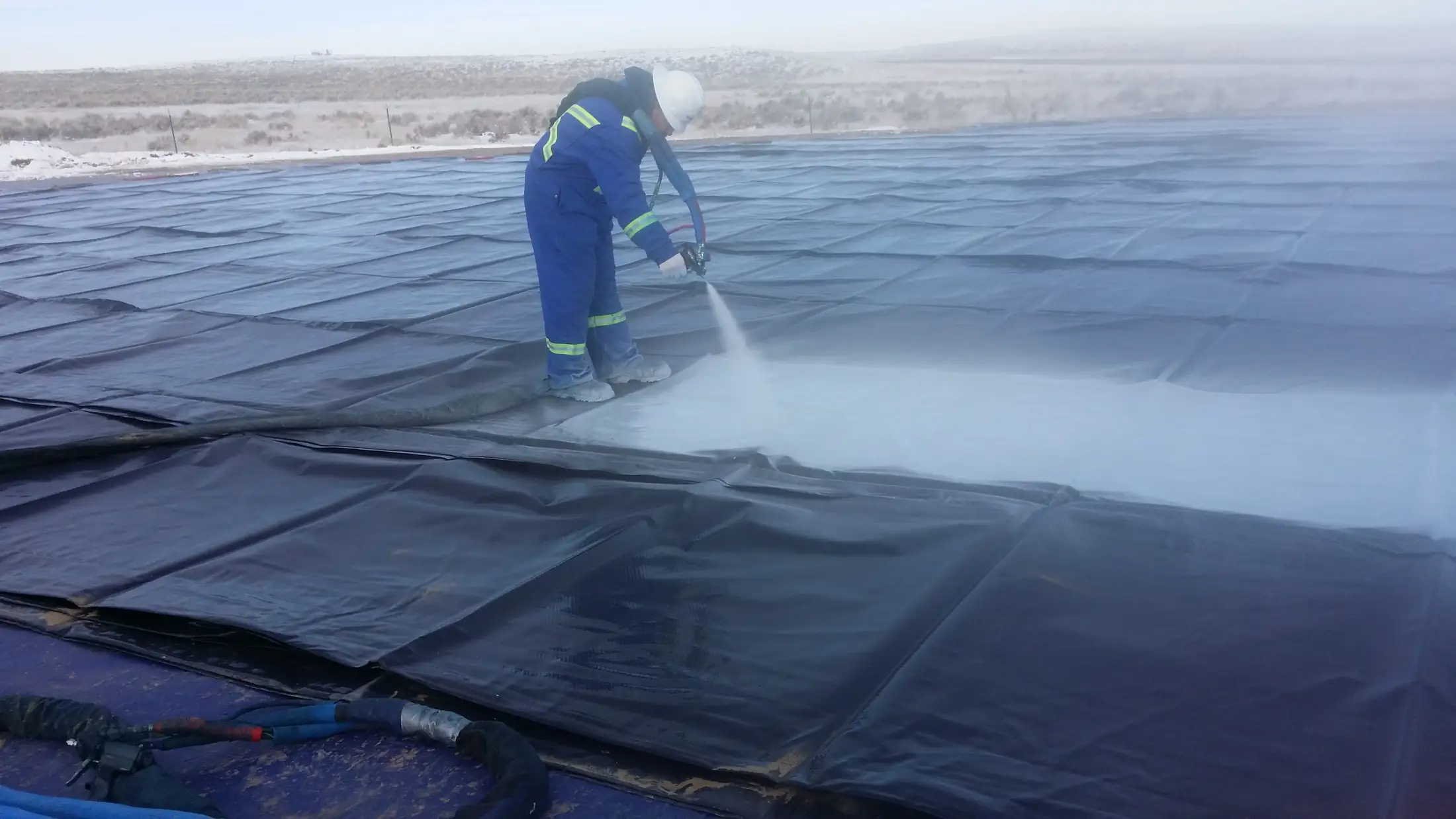
Polyurea sets within seconds into a thick, elastic film. That combination is why it shows up on tanks, roofs, walls and floors that need to keep working.
What it is
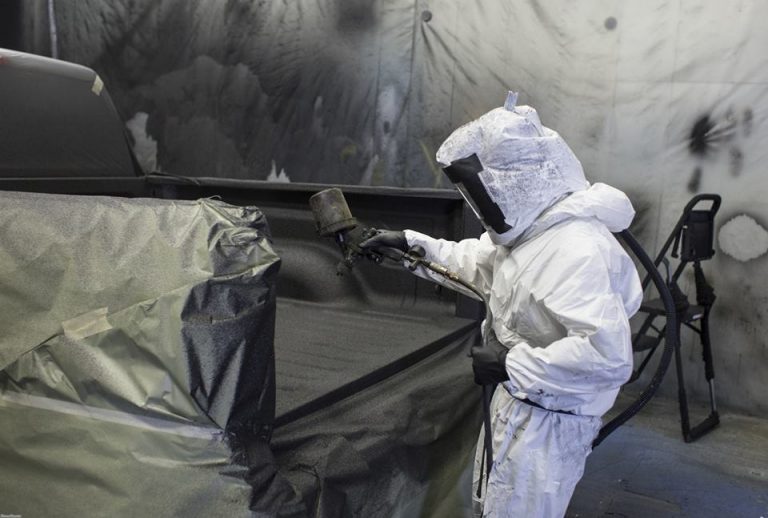
Polyurea forms when an isocyanate meets an amine resin at the tip of a heated spray gun. The two react so fast that the film gels before it can run, even on walls and ceilings.
Why it protects
A thick, continuous, elastic layer keeps water and chemicals off the substrate, rides over small cracks and absorbs knocks that would chip rigid coatings.
Where it needs help
Aromatic polyurea darkens in sunlight, so outdoor work often adds a colour stable topcoat. Chemical resistance varies by product, and adhesion depends on preparation and primer.
Pure or hybrid
Some products blend polyols into the resin side. They can work well, but they behave differently. Ask for the data sheet and compare the numbers that matter for your job.
Do
- Match the product to the exposure
- Plan a topcoat for sun
- Ask for the data sheet early
- Keep application records
Avoid
- Choosing by brand name alone
- Skipping primer on porous surfaces
- Spraying without a trained crew
- Assuming all polyurea is the same
Common questions
How long does polyurea last?
Service life depends on the product, preparation, thickness and exposure. Ask the supplier and applicator for records from similar jobs.
Can polyurea go over an old coating?
Sometimes. Adhesion has to be tested first, and many older finishes need to be removed or abraded.
General information only. Follow the product data sheet, the safety data sheet and your engineer.