Guide 04 / G4
Maintenance and repair
Even tough coatings get cut, gouged and worn. Regular looks and early repairs keep small damage from becoming a failure.
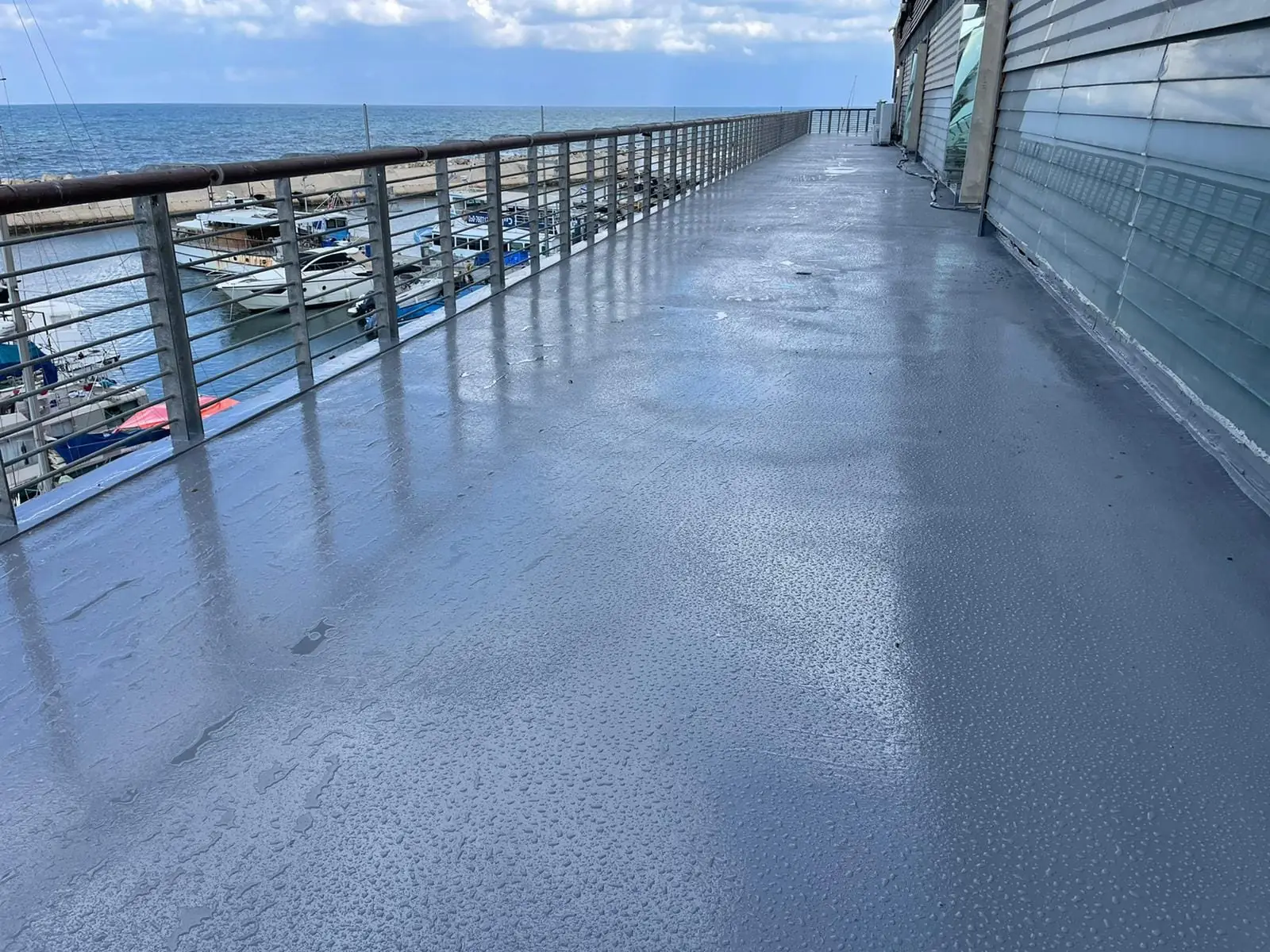
Routine checks
Look for cuts, blisters, lifting edges, worn traffic lanes and discoloured areas. Edges, drains and penetrations deserve a closer look.
Cleaning
Use cleaners the coating supplier approves. Strong solvents and some degreasers can soften certain coatings.
Repairs
Damaged areas are cut back to sound coating, abraded, cleaned and primed before new material goes on, so the patch bonds to the old film.
Recoating
Polyurea can usually be recoated within a set window. After that, abrading and a primer are typically needed. The data sheet gives the rules.
Do
- Photograph damage when found
- Use the original supplier for repair advice
- Abrade before patching
- Check topcoats in sunny areas
Avoid
- Ignoring small cuts
- Patching over dirt
- Using harsh solvents
- Mixing incompatible products
General information only. Follow the product data sheet, the safety data sheet and your engineer.